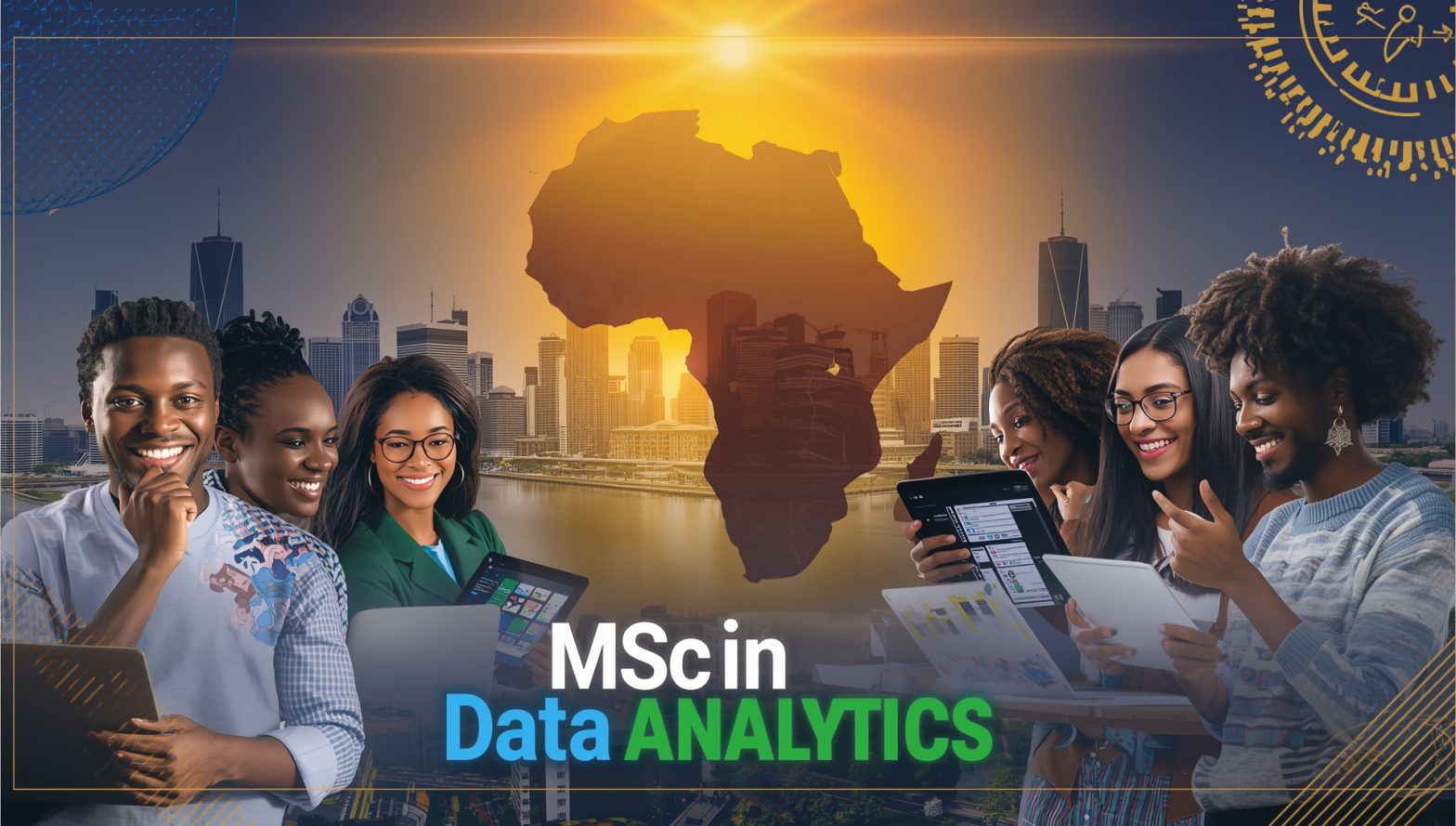
There is a powerful shift happening across Africa — a shift that’s not driven by minerals, oil, or traditional exports, but by something more abundant, renewable, and transformative. That resource is data. From mobile transactions and satellite imagery to digital health records and online consumer behaviour, Africa is now generating unprecedented volumes of information. What remains scarce, however, is the talent capable of turning that information into intelligent action. This is where the value of a Master of Science in Data Analytics becomes deeply relevant. For a continent aiming to leapfrog into a more connected, innovative, and knowledge-driven future, data skills are no longer optional. They are foundational. And for young Africans seeking meaningful careers, this field represents one of the most exciting, impactful paths available today. The growing influence of data across Africa Africa’s data landscape is unique in the best possible way. The rise of mobile connectivity, digital banking, e-commerce, and online education has created an environment where more data is generated per user than ever before. In many African countries, mobile money adoption far exceeds that of traditional banking. Transportation apps, telemedicine platforms, and agritech solutions also contribute to a growing digital footprint. Despite this exponential growth, much of the data remains under-analysed. Organisations collect it but struggle to make sense of it. Governments sit on massive data repositories but lack analytical systems. Small businesses don’t yet know how data can sharpen their decision-making. This gap between data generation and data utilisation creates one of the most promising opportunities for the continent’s workforce. An MSc in Data Analytics bridges that gap by developing talent capable of interpreting patterns, telling stories through numbers, and supporting meaningful decisions. How an MSc in Data Analytics becomes a catalyst for African innovation A strong data analytics programme builds more than technical ability. It creates a mindset — one that embraces curiosity, problem-solving, and experimentation. Across Africa, these qualities matter because industries are changing fast, and traditional solutions often don’t scale. Students gain exposure to tools like machine learning, predictive modelling, cloud analytics, and data visualisation. More importantly, they learn how to apply these skills in contexts that matter most to Africa. A well-designed MSc also encourages hands-on practice, including: This practical approach ensures that graduates step into the workforce ready to solve problems immediately. The sectors where data can truly transform Africa While data touches every industry, there are a few areas where its impact in Africa becomes especially powerful. Agriculture and food systems Agriculture employs a significant portion of Africa’s population, yet unpredictable weather patterns, limited market access, and fragmented supply chains often limit productivity. Data analytics can support farmers through: A data-driven agricultural system can dramatically increase food security and empower smallholder farmers. Fintech and financial inclusion Africa’s fintech ecosystem is one of the fastest-growing in the world. Mobile money platforms have already revolutionised financial access, and analytics adds another layer of innovation by enabling: The more data-driven these systems become, the more inclusive the continent’s financial landscape grows. Healthcare optimisation Healthcare data has tremendous value — not only for treating patients but for predicting disease trends, distributing resources, and improving public health campaigns.Analytics in healthcare helps with: Countries that adopt strong data systems can respond faster to health crises and build more resilient healthcare structures. Urbanisation and smart cities Africa’s cities are expanding rapidly, often faster than infrastructure can keep up. Analytics helps governments and planners understand how people move, how energy is consumed, where congestion appears, and what services are needed most.Things like transportation planning, waste management, street lighting, and digital identity systems all benefit from accurate data. Why African professionals benefit strongly from an MSc in Data Analytics For African professionals, an MSc in Data Analytics offers more than advanced training — it opens doors to opportunity across multiple industries. The degree reshapes the way individuals approach problem-solving, encouraging them to move beyond assumptions and base decisions on clear, reliable evidence. In a region where many sectors are evolving rapidly, this shift in mindset can influence entire industries and bring clarity to decision-making processes that previously relied on intuition or incomplete information. One of the most appealing aspects of the degree is its versatility. A graduate can build a career in banking, agriculture, telecommunications, government agencies, development organisations, or rapidly growing innovation hubs. These fields all generate significant amounts of data and desperately need professionals who can transform information into insight. This wide range of possibilities means that careers can evolve along with the continent’s growth, allowing professionals to explore roles that combine technology, strategy, and impact in meaningful ways. Choosing a programme that fits Africa’s context Selecting the right programme plays a major role in shaping the quality of the learning experience. African students benefit most from programmes that balance theoretical depth with real-world applicability. A strong MSc in Data Analytics should offer opportunities to work with datasets from African markets, include projects grounded in local industries, and provide specialisation options that reflect emerging challenges on the continent. Flexibility also matters, especially for working professionals. Programmes that offer online or hybrid learning modes make it easier to balance studies with other responsibilities. A strong foundation in ethics and data governance is equally important. Africa’s data ecosystem has unique characteristics, such as linguistic diversity, inconsistent data structures, and varied record-keeping systems. Some datasets may be incomplete, unlabelled, or collected under differing standards. A programme that acknowledges these complexities produces graduates who are better prepared for the realities of regional data work. Turning knowledge into impact Completing an MSc in Data Analytics marks the beginning of the journey rather than the end. The true value of the degree appears when graduates start applying their skills in real situations. Africa’s most successful data professionals are those who combine technical ability with thoughtful interpretation, exploring the story behind the numbers rather than focusing solely on the calculations. They become problem solvers who identify patterns others overlook, uncover opportunities hidden within complex datasets, and communicate insights in ways that… Continue reading Data is the New Gold: How an MSc in Data Analytics Unlocks Africa’s Potential